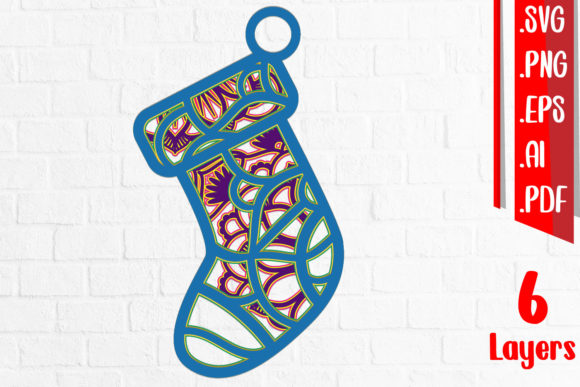
Review: 3D Sock Layered Cut Files for Holiday Projects
As a designer who spends more time at the hoop than away from it, I approach every new machine embroidery design with a mix of excitement and skepticism. We have all downloaded files that look perfect on the screen but turn into a thread nest on the fabric. When I first pulled up the 3D Sock Layered Cut Files, my immediate thought was about the complexity of layering versus the charm of the final finished product. This isn't just a flat icon; it is a design built to create depth, which is exactly what we need to elevate our Christmas collections this year.
First Impressions and Visual Personality
The moment you inspect the layout of the 3D Sock Layered Cut Files, you notice the intentionality behind the segments. It does not rely on a single block of color. Instead, it uses distinct layers to mimic the cuff, the heel, and the body of a stocking, often suggesting a stuffed or dimensional appearance. This visual personality screams "holiday comfort." It feels cozy, traditional, yet modern enough for boutique branding. The mood it creates is warm and inviting, making it an ideal candidate for holiday embroidery projects that aim to evoke nostalgia.
For those of us selling design assets or creating printable mockups, the separation of layers is a goldmine. It allows for incredible customization. You aren't stuck with a pre-determined color scheme. Whether your client wants a classic red and green palette or a chic neutral tone for a winter wedding gift, this embroidery file adapts beautifully. The shape is recognizable instantly, which is crucial for small shop products where brand recognition happens in a split second on social media feeds.
Real-World Application: The Custom Sweatshirt Scenario
To truly test the viability of this design, I imagined a specific real-life scenario: a custom order for a family reunion sweatshirt embroidery project. The client wanted matching crewnecks for a Christmas morning photo shoot. Here is where the 3D Sock Layered Cut Files really shine. On a heavy cotton blend sweatshirt, the layered approach allows the stitching to sit nicely without becoming too stiff.
If this were a single dense fill, the fabric might pucker or feel like cardboard against the skin. However, because the design utilizes separate elements, potentially mixing satin stitch borders with fill stitch interiors, the result is textured but wearable. I could visualize placing this on the left chest for a subtle look or centered large on the back for a statement piece. The customer reaction to such a garment would likely be overwhelmingly positive because it moves beyond the generic store-bought decal and offers the tactile quality of a handmade product.
Beyond apparel, consider a tote bag design for a holiday market. Canvas tote bags are staples for Etsy sellers. The structured nature of canvas supports the weight of the threads well. Using this design as an applique design base—where the layers represent different fabric cuts stitched down—could create a stunning, high-value item that justifies a higher price point than a standard printed bag.
Technical Considerations and Fabric Challenges
While the aesthetic potential is high, we must discuss the technical realities. Working with layered designs requires precision. If you are stitching on stretchy fabric, such as a thin jersey t-shirt or a baby onesie for baby embroidery, you must be vigilant. The stitch density across multiple layers can cause shifting if the stabilizer is not up to the task. I strongly advise using a cut-away stabilizer for garments that will see frequent washing, rather than tear-away, to maintain the integrity of the 3D Sock Layered Cut Files over time.
There are also specific scenarios where caution is needed. If you plan to use this on a curved surface like a cap, the layering might prove tricky. Caps have limited hoop space and a difficult curvature. Trying to align multiple layers of a detailed sock design on a front panel could lead to registration errors where the layers do not line up perfectly. Similarly, on dark fabrics, you need to ensure your thread colors have enough contrast. A dark green sock on a black jacket might disappear unless you use a light-colored outline or backing to make it pop.
Small details matter. Inspect the tiny corners of the heel or the toe in the preview. If the running stitch outlines are too fine, they might get lost on textured fabrics like towels or wool blankets. Always test the design on scrap fabric first. This is non-negotiable for professional commercial embroidery work. Check how the thread colors blend and whether the transition between layers looks seamless or jagged.
Enhancing Brand Value and Customer Trust
Using a well-constructed design like the 3D Sock Layered Cut Files directly impacts your brand consistency. When customers receive a personalized gift that looks professionally executed, their trust in your craft business deepens. Sloppy stitching or poorly aligned layers can ruin a reputation, but a crisp, layered design shows attention to detail. It tells the buyer that you care about the quality of the embroidered patch or garment they are holding.
For digital product sellers, offering this as part of a bundle can increase buyer engagement. Makers are always looking for unique digital embroidery file options that stand out from the sea of basic shapes. By demonstrating how this file works on various materials in your marketing photos—showing it on a kitchen towel, a pillow cover, and a custom apparel item—you provide value and inspiration that goes beyond the file itself.
Final Designer Notes and Best Practices
Before you commit to a full production run, keep these practical tips in mind. First, verify the hoop size requirements. Layered designs sometimes need larger hoops to accommodate registration marks or the full span of the layers. Second, review the license terms. Just because you bought the file does not automatically mean you can resell the digitized file itself; usually, you are licensed to sell the finished product. Confirm this before listing items in your small shop product catalog.
Experiment with thread textures. A matte thread might give a classic look, while a variegated thread could add an interesting dynamic to the layers, simulating a knitted texture. Also, consider the washability. If this is for a child's item, ensure the threads are colorfast and the stitching is secure enough to withstand the washing machine.
In conclusion, the 3D Sock Layered Cut Files offer a versatile and charming option for the upcoming Christmas season. They bridge the gap between simple decoration and complex artistry. Whether you are an Etsy seller looking to expand your holiday inventory or a hobbyist making gifts for family, this design holds significant potential. With the right fabric, proper stabilization, and a keen eye for detail, you can transform this digital asset into a tangible piece of holiday magic that customers will cherish.